

Quiz Summary
0 of 9 Questions completed
Questions:
Information
You have already completed the quiz before. Hence you can not start it again.
Quiz is loading…
You must sign in or sign up to start the quiz.
You must first complete the following:
Results
Results
0 of 9 Questions answered correctly
Your time:
Time has elapsed
You have reached 0 of 0 point(s), (0)
Earned Point(s): 0 of 0, (0)
0 Essay(s) Pending (Possible Point(s): 0)
Categories
- Not categorized 0%
- 1
- 2
- 3
- 4
- 5
- 6
- 7
- 8
- 9
- Current
- Review
- Answered
- Correct
- Incorrect
-
Question 1 of 9
1. Question
Although some animals, like certain insects, can reproduce asexually, all animals have a method of sexual reproduction.
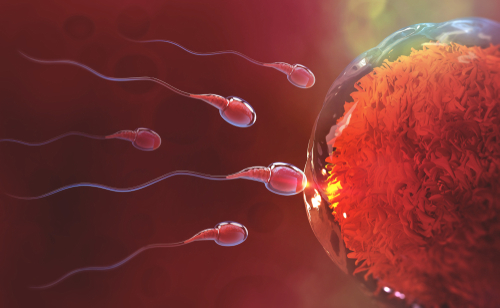
This occurs when a male sex cell and a female sex cell join together to form the new individual.
What are these sex cells called?
In sexual reproduction in animals, the sex cells join together. That’s a from the male animal joining with an from the female.-
In sexual reproduction in animals, the sex cells join together. That’s a from the male animal joining with an from the female.
CorrectIncorrect -
-
Question 2 of 9
2. Question
Whether the animals that are reproducing are insects, starfish, molluscs or anything else, the first cell from the joining of sperm and egg then divides and grows.
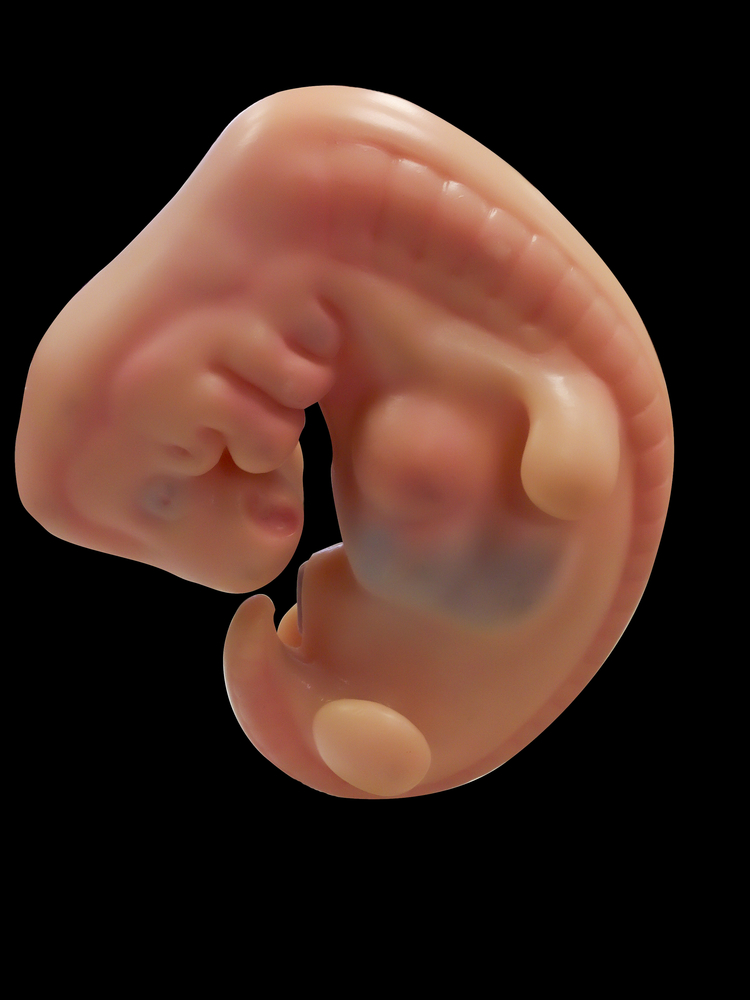
At this very early stage in its development, what is the name for this growing ball of cells?
At this stage, the tiny developing animal is called an .-
At this stage, the tiny developing animal is called an .
CorrectIncorrect -
-
Question 3 of 9
3. Question
Think about external fertilisation.
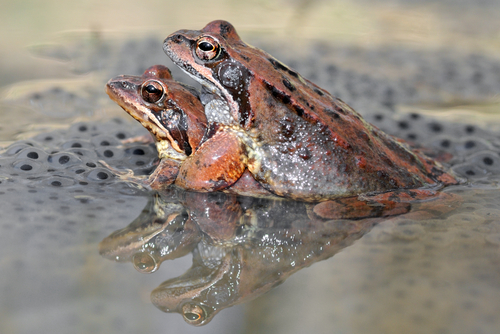
What do you think might be some of the problems associated with external fertilisation?
When the animals release sperm and eggs into the water, some of the eggs never get and much of the sperm goes to . The developing eggs and the young animals are vulnerable to being by predators.-
When the animals release sperm and eggs into the water, some of the eggs never get and much of the sperm goes to . The developing eggs and the young animals are vulnerable to being by predators.
CorrectIncorrect -
-
Question 4 of 9
4. Question
To overcome some of the problems associated with external fertilisation, many animals have adopted internal fertilisation.
However, mammals have gone one stage further and the male has developed an organ that actually introduces the sperm inside the female.
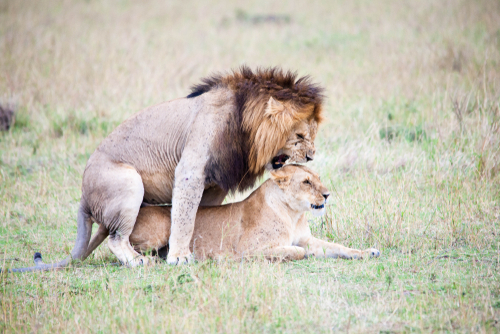
What is the name of this organ?
The male mammal has developed a which passes sperm right inside the female’s body.-
The male mammal has developed a which passes sperm right inside the female’s body.
CorrectIncorrect -
-
Question 5 of 9
5. Question
Some animals face a particular problem when they come to reproduce.
For example, reptiles lay soft-shelled, air-breathing eggs. That is a problem for a particular marine reptile – it has to leave the sea and clamber up the beach to lay its eggs. That leaves both the adult female and the eggs vulnerable to predation.

Then, once they’ve hatched, the young have to try to reach the sea without being caught.
Any idea what this marine reptile might be?
The tracks in the picture are made by a female as it clambers up the beach, digs a hole for its eggs, and tries to return to the sea.-
The tracks in the picture are made by a female as it clambers up the beach, digs a hole for its eggs, and tries to return to the sea.
CorrectIncorrect -
-
Question 6 of 9
6. Question
We’ve looked at whether animals choose internal or external fertilisation, but what about their young?
Some develop outside the body (and hatch from eggs) and some develop inside the female and are born.
Try to sort out these youngsters into ones that ‘hatch’ and ones that are ‘born’.
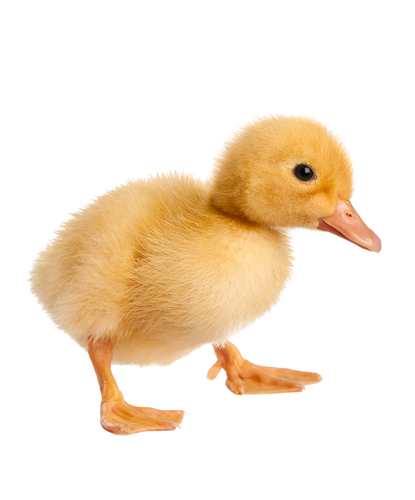
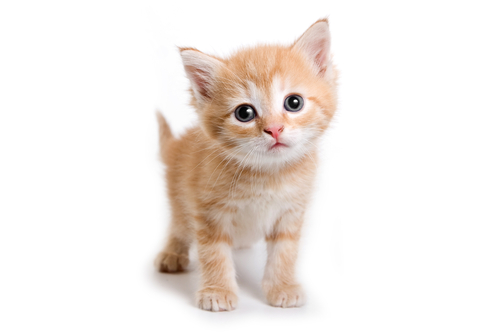
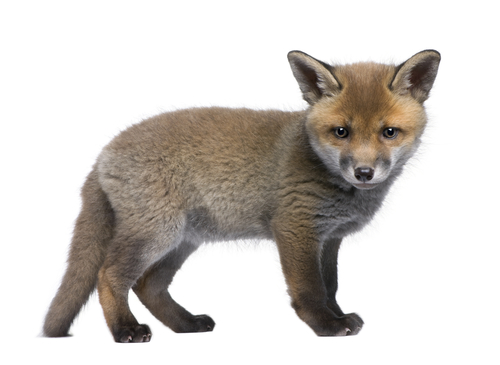
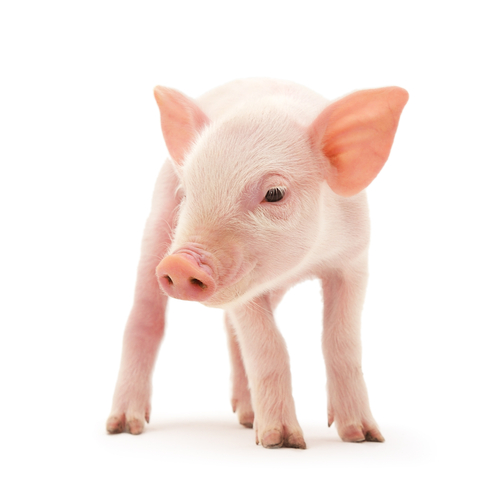
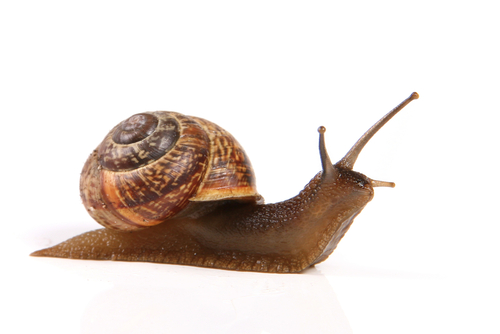
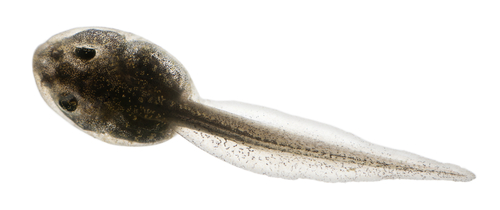
Duckling Kitten Fox cub Piglet Snail Tadpole Sort elements
- Hatched
- Born
- Born
- Born
- Hatched
- Hatched
-
Duckling
-
Kitten
-
Fox cub
-
Piglet
-
Snail
-
Tadpole
CorrectIncorrect -
Question 7 of 9
7. Question
Earthworms are one of many creatures that can mate in an unusual way: if you look at this picture, you can see two worms mating with each other.
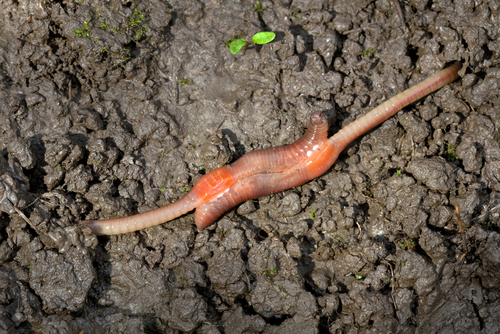
Earthworms are both male and female, so they can mate with each other.
Which earthworm do you think will lay eggs?
CorrectIncorrect -
Question 8 of 9
8. Question
Many male animals develop special colours or adaptations (like a stag growing antlers) to encourage females to breed with them.
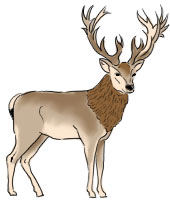
They often perform elaborate dances or fly in a special way.
Do you know what this behaviour is called?
CorrectIncorrect -
Question 9 of 9
9. Question
Let’s wrap up this activity by sorting out animals according to where they develop.
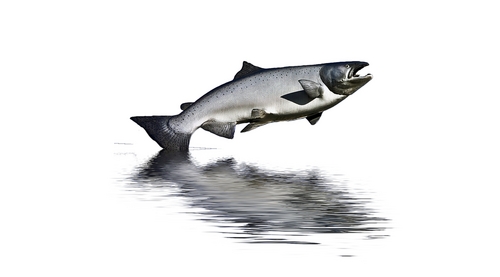
What you have to do is to match each animal with the way in which its eggs are fertilised (internal or external) and also whether the young develop inside or outside the body.
[Hint: you’d match ‘frog’ with ‘external fertilisation & external development’.]
Sort elements
- Salmon
- None
- Pigeon
- Dolphin
-
External fertilisation & external development
-
External fertilisation & internal development
-
Internal fertilisation & external development
-
Internal fertilisation & internal development
CorrectIncorrect
