
Introduction
Photosynthesis is the process plants use to produce glucose.
.jpg)
Any factor that slows down the rate of photosynthesis is called a limiting factor. These factors include:
Temperature
Amount of carbon dioxide
Light intensity
Amount of chlorophyll
They are called limiting factors because they “limit” the reaction that is taking place.
Water isn’t generally considered a limiting factor because even a small amount would allow photosynthesis to occur.
Light Intensity
As you might already know, light is needed for photosynthesis. At night, there’s no light for plants to photosynthesise with, so plants respire at this time. During the day, plants photosynthesise and respire.
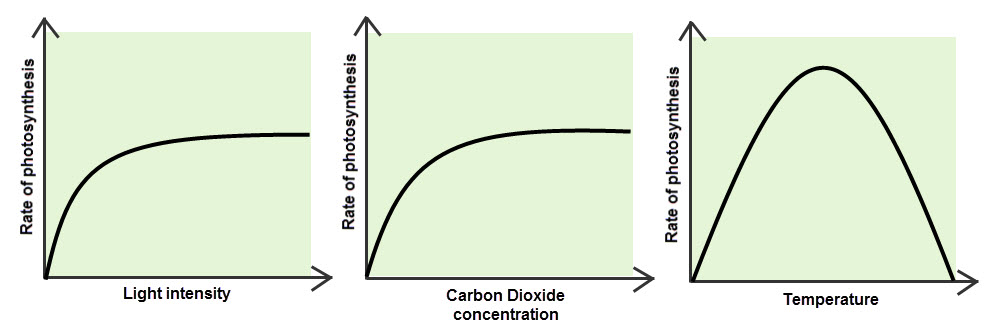
The more light there is, the greater the rate of photosynthesis. If the rate of photosynthesis stops increasing even though there’s still lots of light, something must be limiting photosynthesis. Carbon dioxide, the temperature or the amount of chlorophyll could be the limiting factors. Graphs are useful to demonstrate this:
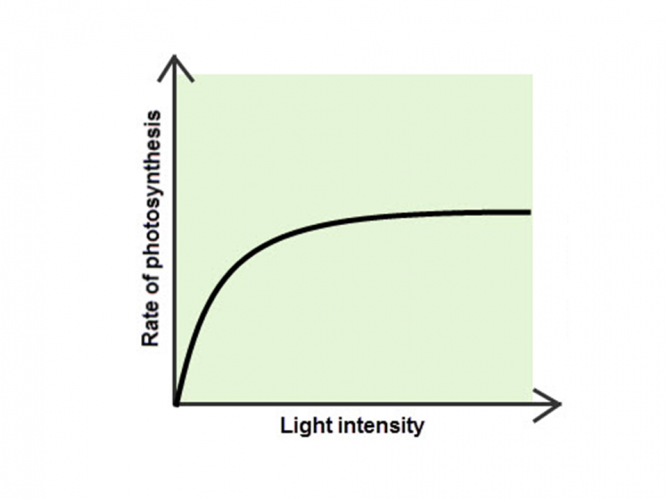
The graph above shows that as the light intensity increases, so does the rate of photosynthesis. The rate of reaction begins to level off because another factor is limiting the reaction e.g. carbon dioxide or temperature.
This means that increasing the light intensity will have no further effect because another factor is preventing the reaction from happening any faster.
Carbon dioxide concentration
Carbon dioxide is also essential for photosynthesis. If there’s plenty of carbon dioxide, photosynthesis can occur. But if there isn’t much light, or the temperature is too high, or there’s not enough chlorophyll, the rate of photosynthesis will decrease.
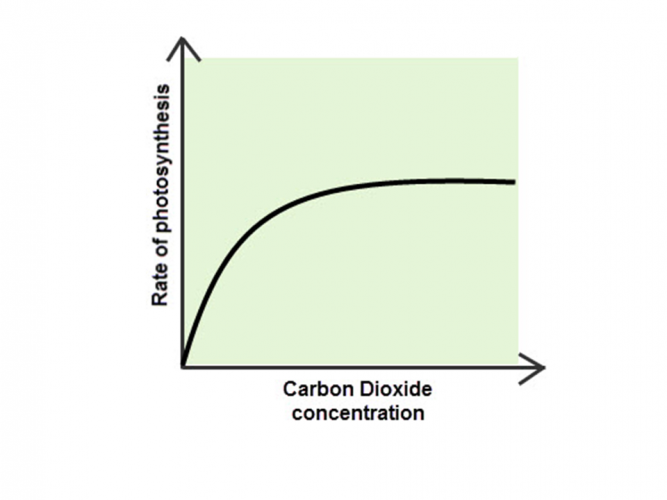
The graph above shows that as the carbon dioxide concentration increases, so does the rate of photosynthesis. The rate of reaction begins to level off because another factor is limiting the reaction e.g. light or temperature.
This means that further increases in carbon dioxide have no further effect because another factor is preventing the reaction from happening any faster.
Temperature
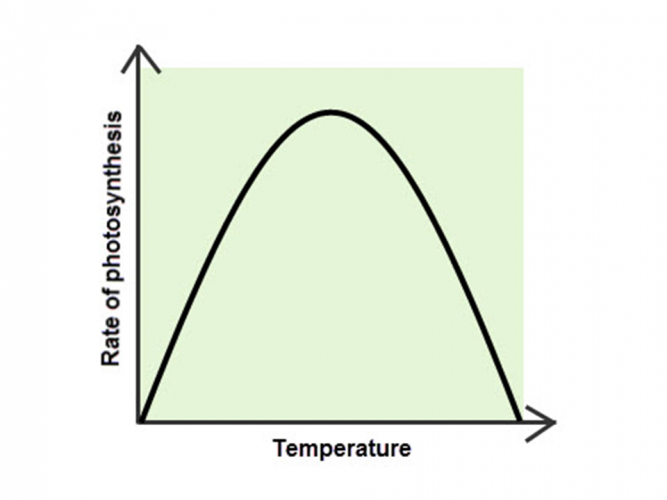
As the temperature increases, so does the rate of reaction. This is because more collisions occur between particles and enzymes when the temperature is warmer. The highest point on the graph is the optimum temperature – this is the best temperature for enzymes to work at, so photosynthesis is at its fastest (usually around 30 – 40ºC). Any further increase in temperature causes enzymes to change shape or denature, so the rate of reaction quickly falls.
Chlorophyll
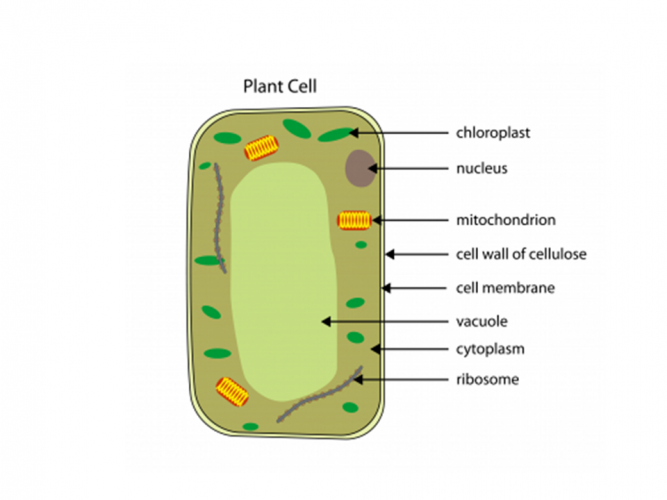
Chlorophyll found in chloroplasts absorbs light energy in order to power photosynthesis. The amount of chlorophyll affects the rate of photosynthesis. Plants in darker conditions will produce more chlorophyll, so that the plant can absorb the required amount of light in order to photosynthesise.

